
Vanity metrics are lying to you

A post hits 200,000 views. The team celebrates. Screenshots fly around the group chat. The founder feels good for a week. Then the month closes and revenue is flat. Nobody can explain why. This happens constantly, and the reason is simple: the number everyone cheered for was never connected to the business. Reach felt like proof. It was noise wearing a suit.
We don't post. We perform. And performance has a scoreboard that most brands are refusing to read.
The seduction of the big number
Vanity metrics are the ones that go up and to the right no matter what. Views, likes, followers, impressions. They feel like progress because they're big, public, and easy to screenshot. That's exactly the problem. A metric that only ever flatters you is not measuring anything.
Here's the trap. A "successful" post can hide a failing business. Ten million views on a reel that drove zero installs is an expensive way to feel important. Meanwhile a quiet campaign that reached 40,000 of the right people and produced 900 signups at a low cost per install is a machine you should be pouring money into. One looks like a win on Instagram. The other is a win in the bank. They are almost never the same post.
Reach is not worthless. In our Miswag work, a Black Friday campaign reaching 5M+ people across digital and offline over four weeks did real work at the top of the funnel. But reach is a means, not a scoreboard. It only matters if you can trace it down the funnel to something a business actually feels: an install, a signup, a purchase, a repeat purchase.
The numbers that don't lie
Business metrics share one trait vanity metrics lack: they cost you something or earn you something. They're tied to money and behaviour, so they can't be faked by a good hook and a trending sound.
- CPI (cost per install) and CAC (cost to acquire a customer) — what you actually pay to bring one real person in. - CTR (click-through rate) — do people act, or just scroll past feeling entertained? - Conversion rate — of those who arrive, how many do the thing that matters? - ROAS (return on ad spend) — for every 1,000 IQD in, how much comes back out? - LTV (lifetime value) — what a customer is worth over time, which is the only number that tells you what you can afford to spend to get one.
Put two of these together and the fog clears. A high CTR with a dead conversion rate means your ad is great and your landing experience is broken. A low CPI with poor LTV means you're buying cheap customers who leave. The pairs tell the story; the single big number never does.
The five numbers to demand
Next time an agency or your own team walks in with a deck full of reach, stop them. Ask for these instead. If they can't produce them, that tells you everything.
1. What did we spend, in IQD, and what did it return? (ROAS) 2. What did one customer cost? (CAC or CPI) 3. Of the people we reached, how many converted? (conversion rate) 4. What is a customer worth to us over time? (LTV) 5. Are those customers staying or leaving? (retention)
Notice retention on that list. Your warmest audience is already inside your app or store. A push notification or in-app banner to existing users converts at a fraction of the cost of chasing strangers on a feed. An agency obsessed only with reach will ignore the cheapest growth you own.
Measure what you'd defend to an investor
Ask one question of every metric: would I put this number in front of someone deciding whether to fund my business? Views won't survive that room. CAC, ROAS, conversion and LTV will. Reach can start the conversation, but only business metrics finish it.
Vanity metrics tell you that you were seen. Business metrics tell you whether being seen was worth paying for. Build your reporting around the second kind, and the celebrations you have will be the ones that show up in the bank.

Inside Miswag's Black Friday: reaching 5 million in a month
How Miswag owned Iraq's biggest sale of the year with an office-themed creative series, performance ads and a coordinated on/offline push that reached 5 million people in four weeks.
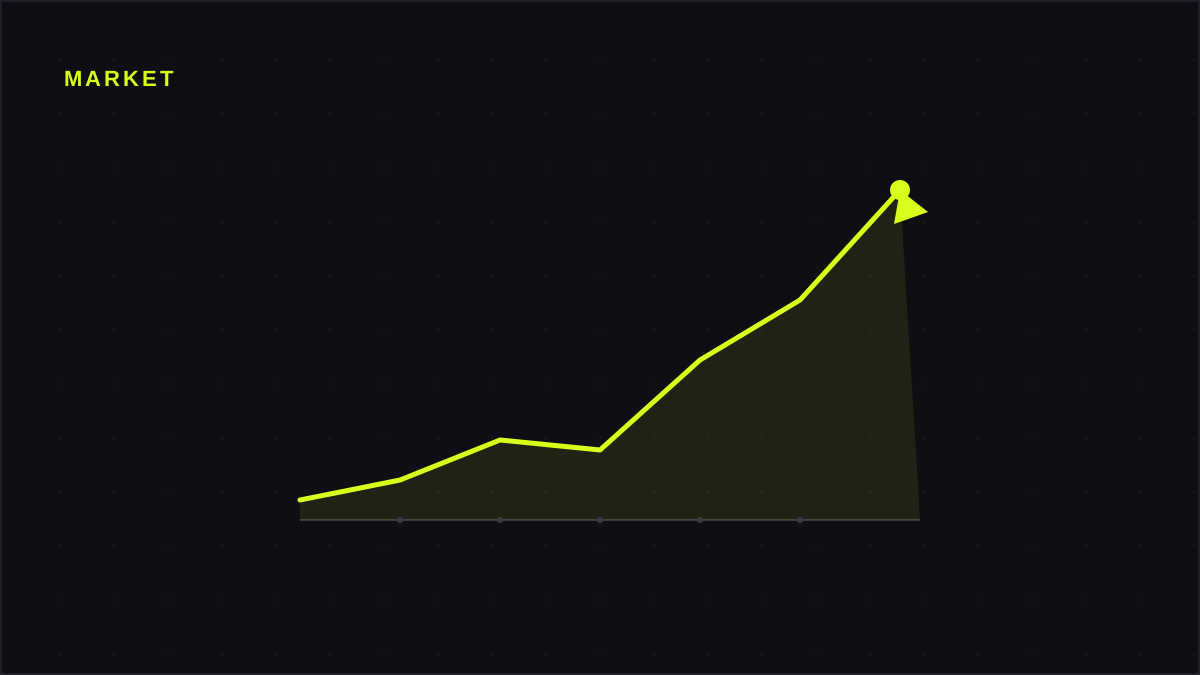
Iraq's digital moment: why now is the time to build a performance brand
Iraq has a young, phone-first population, rising app adoption, and almost no dominant local performance brands. The window to move first is open now — and it won't stay open.
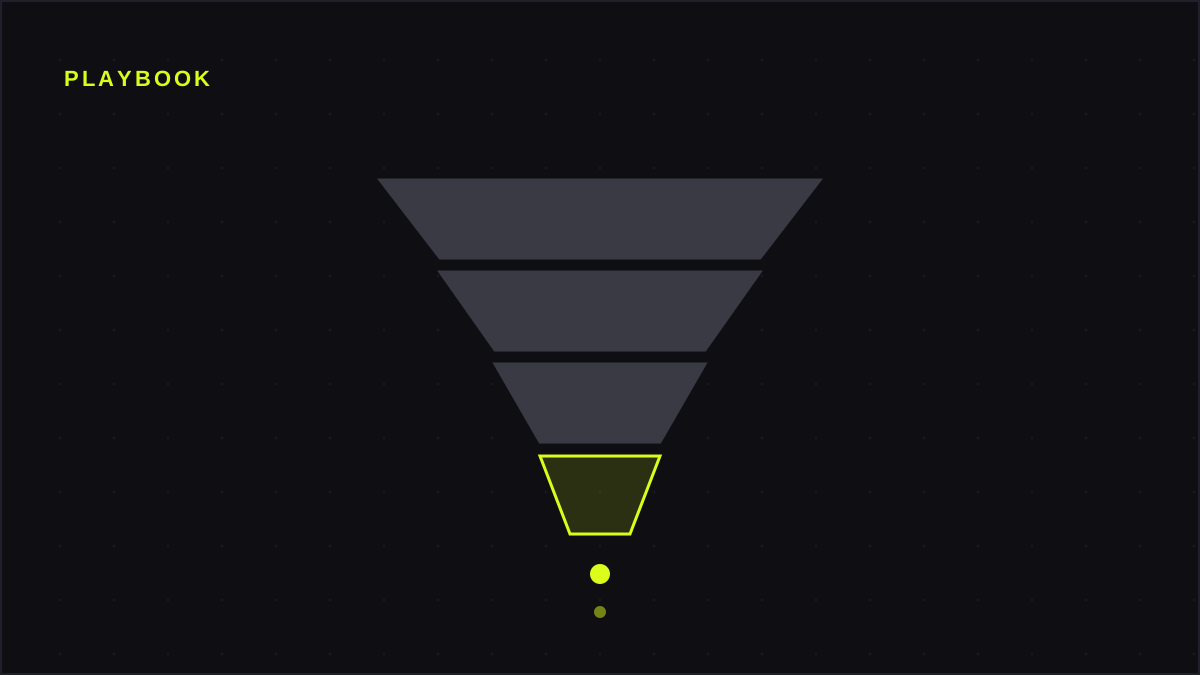
The full-funnel playbook for Iraqi brands
Awareness, consideration, conversion, retention — the four stages every Iraqi brand needs, with the content, channel, metric, and one tactic to run at each.